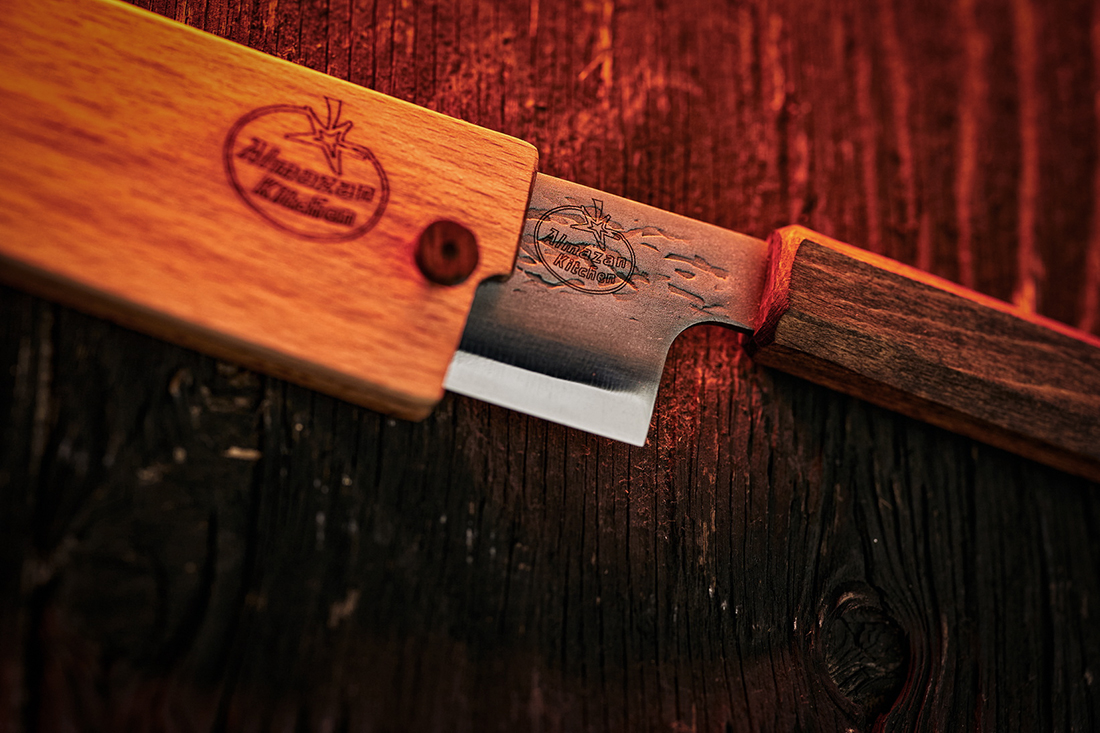
If you collect knives, you develop a sense for when a blade is real and when it is cosplay. Painted-on hammer marks. Soft steel hiding behind a fancy name. Handles glued on crooked. The market is full of kiritsuke-shaped objects that look the part and disappoint the moment you put them to a board. So we approached this one with the usual skepticism.
It did not last long.
The steel and the grind
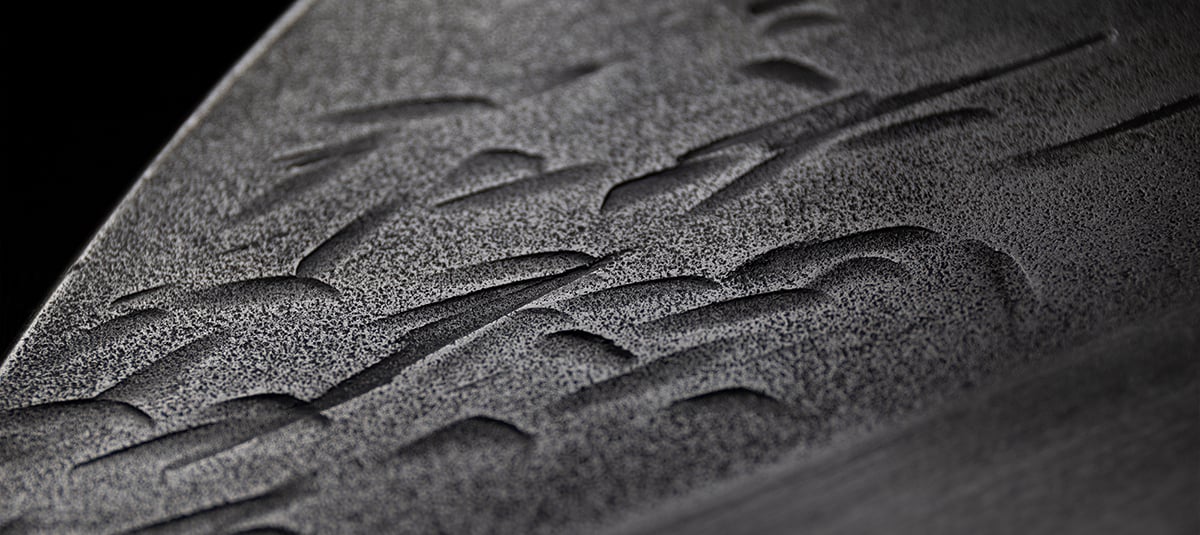
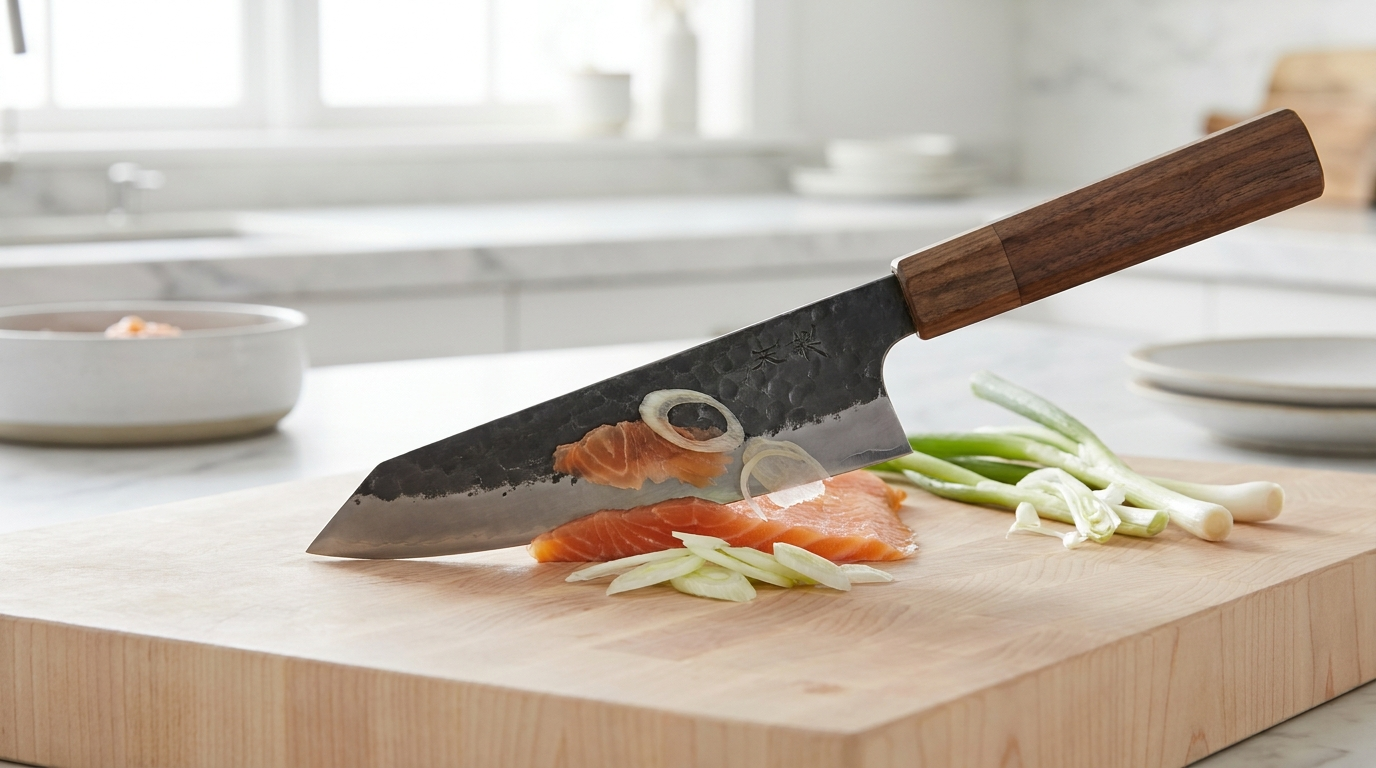
The blade is forged from premium Japanese steel as a single piece and hardened to 60 to 61 HRC. That is firmly in the range where an edge gets genuinely keen and stays there. At roughly 2 mm at the spine and tapering thin, it has the geometry to fall through produce. The hammered finish is real forge texture, not decoration, which also helps food release off the face.
Balance sits just forward of the handle, and at 211 grams it is light for its 189 mm length. That combination is what gives it that nimble, precise feel that separates a real performer from a heavy show-piece.
This is not a kiritsuke-shaped souvenir. It cuts like a tool that respects its own name.
The maker story
These are forged on Rtanj Mountain in Serbia, by the team behind the Almazan Kitchen channel, which has pulled billions of views cooking over open fire. The pairing is unusual and it works: Japanese blade geometry and steel, Serbian forging tradition and walnut. Each piece carries slightly different hammer marks, so no two are identical, which collectors will appreciate.
Specifications
Care, and the one caveat
High hardness carbon steel rewards you with a fierce edge but asks for basic care: hand wash and dry, no dishwasher, no bones or frozen product, and a wipe of oil for long storage. Treat it like the precision instrument it is and it will hold up for decades.
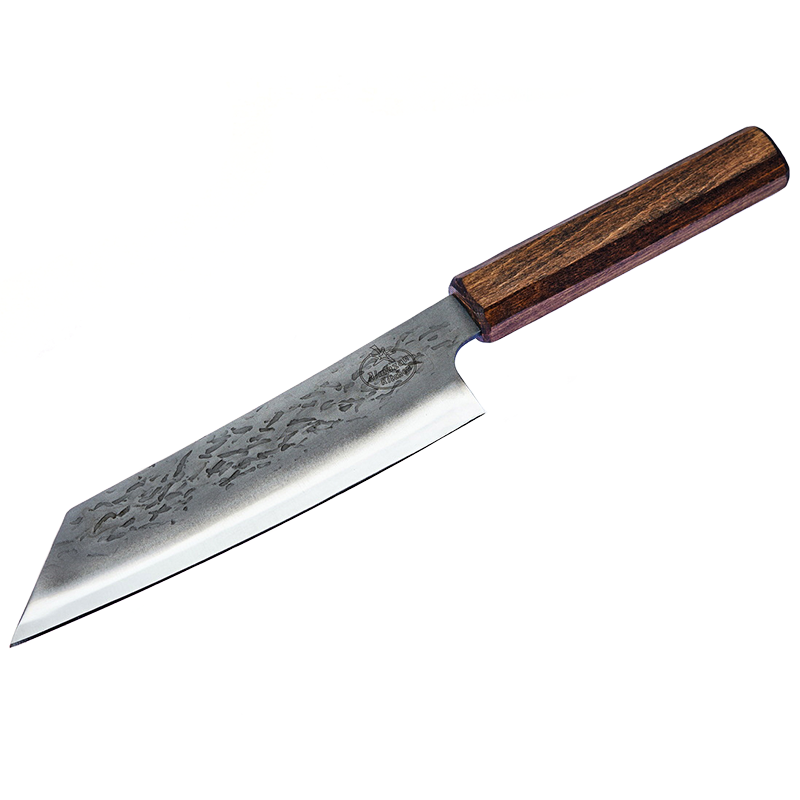
Hand-Forged Kiritsuke
★★★★★ 5.0 / 5 from 770+ reviews
$149.95 $699.95 Save $550
The verdict
At this price, a hand-forged mono-steel kiritsuke at 60 plus HRC with a real forge finish is, frankly, hard to argue with. It out-cuts factory blades that cost the same and looks better than blades that cost double. For a collector or a serious home cook, it earns its spot on the magnet strip.
From the community
Add it to the collection
Forged in small batches on Rtanj Mountain. Confirm current price and availability on the official page.
$149.95 $699.95 Limited release
Editor's note: pricing and promotions are set by the retailer and may change. Reviews shown are illustrative placeholders pending final data.